Feeling exhausted after a demanding day is different from losing muscle strength. True weakness means that muscles cannot produce the power needed for an activity that was previously manageable.
A neurologist for muscle disease evaluates whether declining strength originates within the muscles themselves or another part of the neurological system.
For patients in Dadar, recognising functional changes can be particularly useful because muscle and neuromuscular disorders do not always begin with pain.
Everyday signs of genuine weakness
Patients may first notice difficulties rather than describing themselves as weak.
Examples include:
- Struggling to rise from a low chair
- Increasing difficulty climbing stairs
- Trouble lifting the arms overhead
- Frequently dropping objects
- A foot dragging while walking
- Difficulty opening containers
- Repeated unexplained falls
- Reduced ability to perform familiar physical tasks
The location and distribution of weakness can provide important information.
For example, weakness mainly affecting the shoulders and hips may suggest a different process from weakness beginning in the feet or hands.
Not every weakness originates in muscle
Muscle disease is only one possible explanation.
Problems affecting peripheral nerves can reduce strength. Disorders involving the neuromuscular junction can interfere with communication between nerves and muscles.
The spinal cord and brain can also produce characteristic patterns of weakness.
Additionally, metabolic abnormalities, nutritional problems, certain medications, and systemic illnesses can contribute to reduced muscle function.
How neurologists evaluate weakness
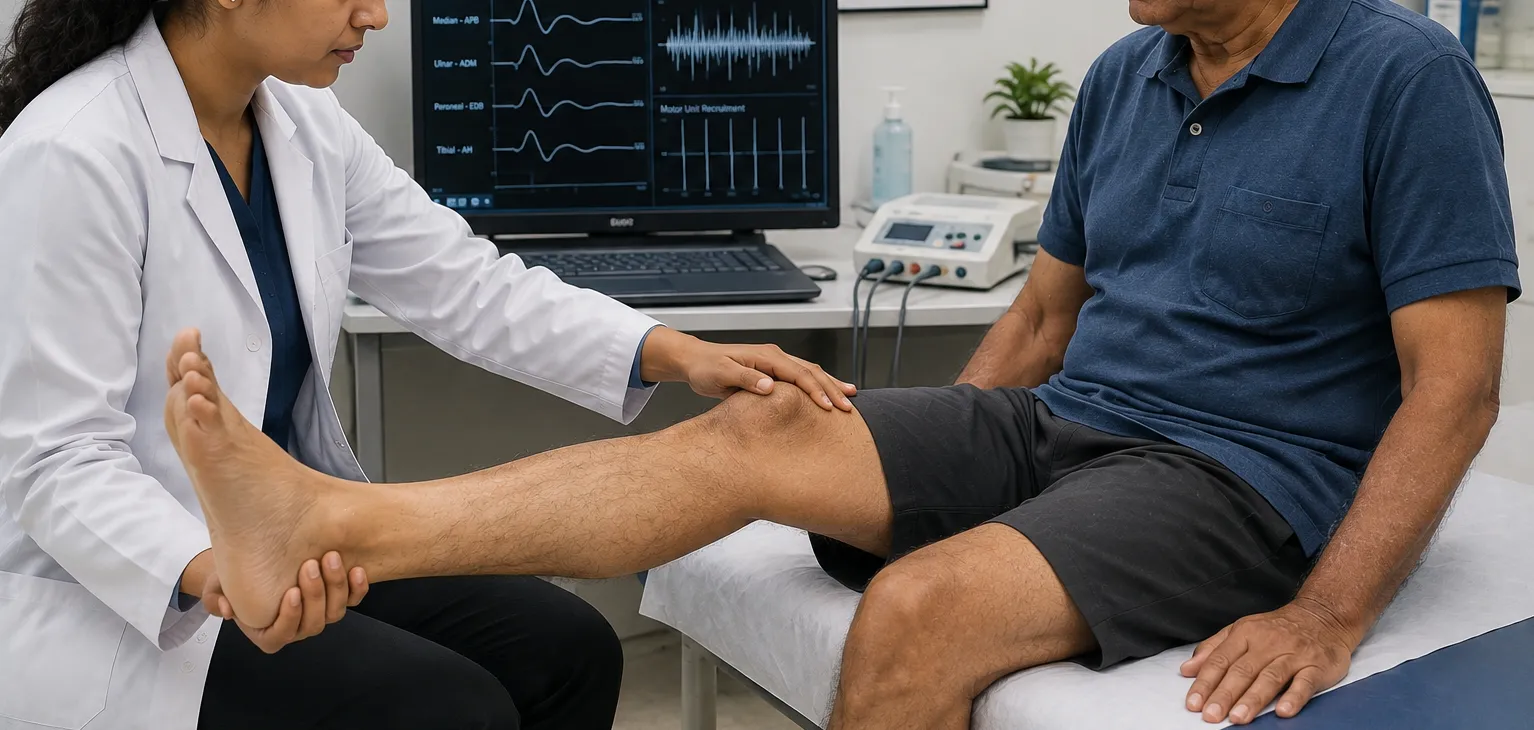
A neurological examination can assess muscle strength across different muscle groups, reflexes, tone, sensation, coordination, and gait.
The neurologist may also look for muscle wasting or involuntary muscle movements.
Depending on the findings, investigations may include:
- Blood tests
- Nerve conduction studies
- Electromyography
- Imaging
- Selected specialised investigations
Testing is guided by the suspected diagnosis rather than performed identically for every patient.
Keep track of functional changes
When weakness develops gradually, practical observations can be valuable.
Consider whether the same staircase has become harder to climb, whether carrying groceries has become more difficult, or whether falls have increased.
These real-world changes can help demonstrate how symptoms are progressing.
Rapidly worsening weakness requires timely assessment. Difficulty swallowing, speaking, or breathing alongside weakness requires urgent medical attention.
Why an accurate diagnosis matters
Neuromuscular conditions are a diverse group of disorders. Treatment therefore depends on what is actually causing the weakness.
Management can involve treating an underlying condition, medication for specific disorders, physiotherapy, rehabilitation, mobility support, and monitoring of functions affected by the condition.
Dr. Jharna P. Mahajan evaluates neurological and neuromuscular symptoms for patients in Dadar. A structured assessment can help differentiate muscle disorders from nerve, spinal, and other neurological causes of weakness.
Persistent loss of strength should not automatically be attributed to ageing, stress, or lack of exercise. When everyday physical abilities are genuinely declining, identifying the source of weakness is an important first step toward appropriate management.
Keywords