Muscular dystrophy includes a group of inherited disorders characterised by progressive muscle weakness. Different forms can begin at different ages and affect people in different ways, which means a general diagnosis of muscle weakness is not enough to determine long-term care.
For families in Byculla, effective Muscular Dystrophy Management starts with identifying the specific condition and understanding which aspects of health may require ongoing monitoring.
How Diagnosis Guides Management
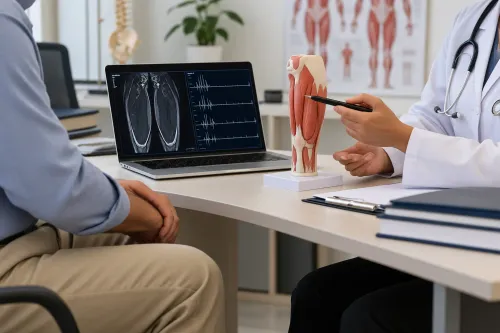
The diagnostic process may involve a detailed family history, neurological examination and blood investigations.
Genetic testing can be particularly important in some forms of muscular dystrophy. Additional investigations may be recommended depending on the clinical pattern.
The purpose is to distinguish muscular dystrophy from other neuromuscular conditions that can also cause progressive weakness.
Management May Require Several Forms of Care
Some muscular dystrophies affect more than the muscles used for walking.
Depending on the specific disorder, monitoring may need to consider:
- Mobility
- Joint flexibility
- Respiratory function
- Heart health
- Nutrition
- Swallowing
- Everyday independence
Neurological care may therefore be coordinated with rehabilitation and other specialties when required.
The Role of Physiotherapy
Exercise needs to be approached thoughtfully in progressive muscle disorders.
Physiotherapy may help maintain mobility, flexibility and positioning while reducing complications associated with reduced movement.
However, aggressive strengthening is not automatically suitable for every muscular dystrophy.
The exercise programme should match the diagnosis and the patient’s functional ability.
Benefits and Risks of Treatment
Treatment options differ substantially among types of muscular dystrophy.
Some conditions have disease-specific therapies available for selected patients. Other forms rely mainly on supportive and multidisciplinary management.
Any proposed treatment should be discussed in terms of expected benefit, eligibility, limitations and potential adverse effects.
Families should be cautious about claims promising complete regeneration of damaged muscle.
What Does Recovery Mean
Progressive genetic muscle disorders generally do not have a conventional recovery period.
Management instead aims to preserve function, support independence and address complications.
Monitoring changes over time can help identify when additional mobility, respiratory or other support becomes appropriate.
Preparing for Follow Up
Families can record practical changes between appointments.
Useful observations include:
- Frequency of falls
- Stair climbing ability
- Walking distance
- Difficulty rising from a chair
- Hand function
- Swallowing problems
- Breathing symptoms
- Changes in sleep
These observations can reveal functional changes that may not be obvious during a short consultation.
Frequently Asked Questions
Is every inherited muscle disorder muscular dystrophy?
No. Several inherited neuromuscular disorders can cause weakness.
Why is genetic testing useful?
It may help establish the specific diagnosis and provide information relevant to treatment and family counselling.
Can physiotherapy cure muscular dystrophy?
No. Its role is generally to support mobility, flexibility and function.
When should breathing difficulties be reported?
New or worsening breathing symptoms should be evaluated promptly.
Dr. Jharna P. Mahajan evaluates neuromuscular symptoms for patients in Byculla.
Well-planned Muscular Dystrophy Management focuses on accurate diagnosis, preservation of function, monitoring for complications and adapting care as the individual’s needs change.
Keywords