Difficulty climbing stairs, lifting the arms overhead or rising from a chair can sometimes be attributed to inactivity or ageing. When weakness persists, progresses or begins interfering with routine activities, a muscle disorder may need to be considered.
For patients in Marine Lines, appropriate Myopathy Treatment starts by determining whether the weakness originates in muscle tissue and identifying the underlying cause.
This matters because nerve disorders, spinal conditions and neuromuscular junction disorders can produce symptoms that appear similar.
What Myopathy Can Look Like
Many myopathies predominantly affect muscles closer to the centre of the body.
Symptoms may include difficulty:
- Climbing stairs
- Rising from a low chair
- Lifting objects overhead
- Washing or combing hair
- Walking longer distances
- Getting up from the floor
Some patients experience muscle pain, while others primarily notice weakness.
The pattern and progression provide important diagnostic information.
How Myopathy Is Investigated
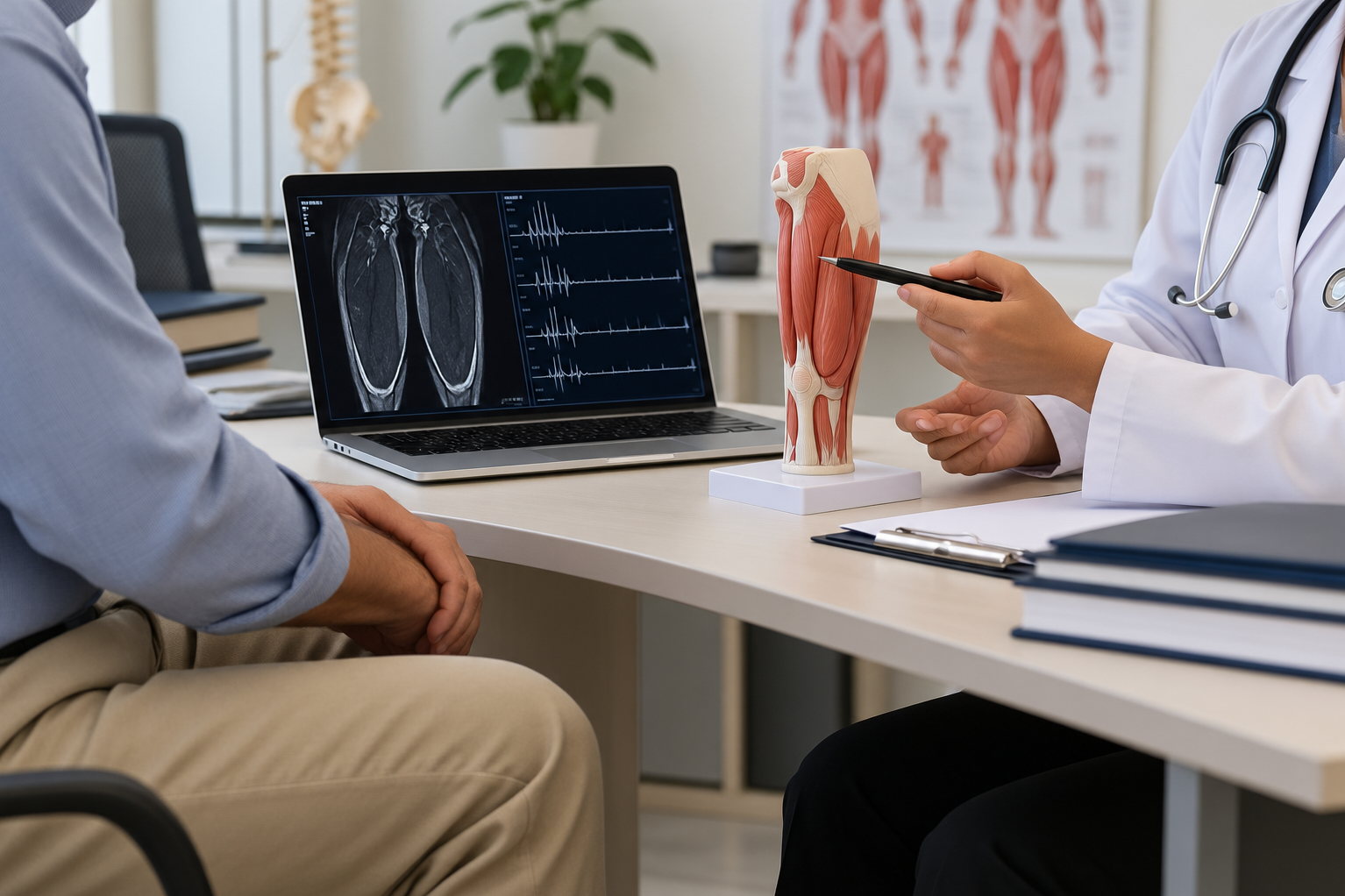
Neurological assessment may examine muscle strength, reflexes, sensation, muscle bulk and walking.
Depending on the suspected cause, investigations can include:
- Muscle enzyme blood tests
- Electromyography
- Nerve conduction studies
- Autoimmune investigations
- Imaging
- Genetic testing
- Other specialised testing
Not every patient needs all of these investigations.
The testing strategy should be based on the clinical pattern.
Why Diagnosis Determines Treatment
Myopathy is a category of muscle disorders rather than a single disease.
Causes may include inflammatory, inherited, metabolic, endocrine and medication-related conditions.
Treatment therefore varies substantially.
An inflammatory muscle disorder may require therapy directed at the immune system. A medication-related condition may require careful review of the contributing medicine. Inherited muscle diseases may require long-term neurological and rehabilitation support.
Benefits and Potential Risks
Treatment aims depend on the diagnosis.
Possible objectives include improving strength, controlling inflammation, preventing further muscle damage, preserving mobility and managing complications.
Some medicines used for inflammatory muscle conditions can also produce adverse effects and require monitoring.
Treatment should therefore be selected after adequate diagnostic evaluation.
Understanding Recovery Time
There is no universal recovery period for myopathy.
Some acquired conditions can improve substantially once the underlying cause is treated, although rebuilding muscle strength may take weeks or months.
Inherited or progressive disorders may require continuing management instead.
Rehabilitation may support function, but exercise intensity should be appropriate for the specific muscle condition.
Care Before and After Treatment
Before assessment, patients should prepare a complete list of medicines and supplements and note approximately when weakness began.
Family history can also be important.
After treatment starts, changes in walking distance, stair climbing, falls, swallowing and routine activities can help demonstrate whether strength is improving.
Rapidly progressive weakness, breathing difficulty or major swallowing problems require urgent medical evaluation.
Frequently Asked Questions
Is myopathy the same as neuropathy?
No. Myopathy primarily affects muscle, while neuropathy involves peripheral nerves.
Can medication contribute to muscle problems?
Certain medicines can cause muscle symptoms in some patients.
Does every patient require a muscle biopsy?
No. The need depends on the suspected diagnosis and results of other investigations.
Can physiotherapy help?
Appropriately planned rehabilitation can support mobility and function, depending on the underlying disorder.
Dr. Jharna P. Mahajan evaluates muscle weakness and other neuromuscular concerns for patients in Marine Lines.
Effective Myopathy Treatment begins with establishing why the muscles are weak and then matching medical treatment, rehabilitation and follow-up to the specific condition identified.
Keywords