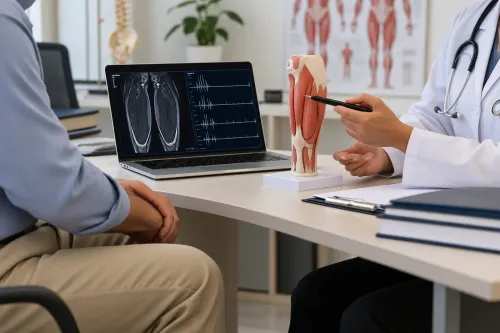
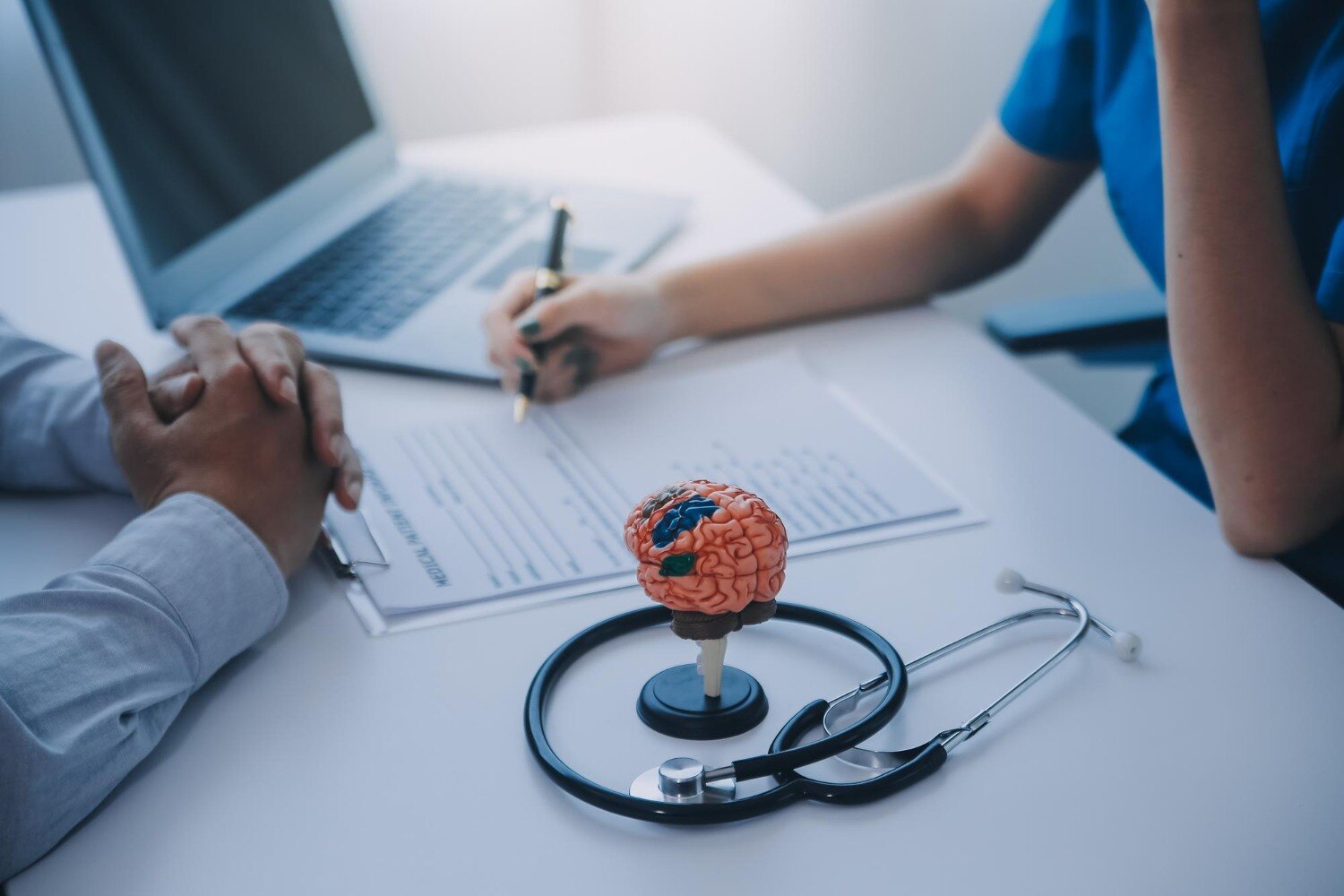
The first visit is usually a structured process: you explain what happened, the clinician examines how your nervous system is working, and both of you decide whether testing or follow-up is needed. Knowing when to seek emergency care, what records to carry, and how to describe symptoms will make the appointment safer and more useful.
Key takeaways
- Call emergency services for sudden weakness, speech trouble, vision loss, or severe imbalance.
- Bring medication lists, medical records, scans, and a written symptom timeline.
- Expect questions, strength and reflex checks, coordination testing, and an initial care plan.
- A diagnosis may require follow-up visits, imaging, blood tests, or specialist referrals.
Should You Attend a Neuro Care Centre or Seek Emergency Care?
A sudden change in neurological function belongs in emergency care, not a waiting list. Stroke symptoms can start without pain and still cause permanent injury, so call emergency services for sudden facial drooping, one-sided arm or leg weakness or numbness, speech or language difficulty, sudden vision loss, or abrupt severe imbalance—even if the symptom disappears.
Seek emergency care immediately for:
- A new, extremely severe headache, especially with vomiting, confusion, neck stiffness, weakness, or vision change
- A seizure lasting more than five minutes
- Repeated seizures without recovery between them
- Inability to breathe or swallow
- Rapidly worsening weakness, numbness, confusion, or loss of consciousness
A neuro care centre is appropriate for symptoms that are stable, gradual, or recurring without emergency warning signs, such as persistent tingling, tremor, memory changes, headaches with an unchanged pattern, or slowly developing balance problems.
Book sooner if symptoms interfere with walking, work, eating, or sleep; contact a clinician promptly if a new medicine or dose change affects alertness, balance, memory, or movement.
Do not drive yourself after sudden neurological symptoms. Bring your medication and supplement list, including doses, because sedatives, some pain medicines, anticholinergic drugs, and antiseizure medicines can mimic or worsen neurological problems. When uncertain, choose emergency assessment rather than waiting for an outpatient appointment.
What Should You Bring and How Should You Describe Your Symptoms?
Bring a one-page symptom timeline and an up-to-date medication list with each drug’s dose, timing, and reason for use. Include non-prescription pain medicines, sedatives, antiseizure medicines, and supplements; these can affect alertness, memory, balance, tremor, or nerve symptoms.
- Pack prior prescriptions, discharge summaries, laboratory results, blood-pressure or glucose records, and the actual MRI and CT reports. If available, bring the imaging discs or electronic files rather than reports alone.
- Bring the EEG report, but do not treat a normal result as proof that a seizure did not occur. A clinician also needs what happened before, during, and after the event.
- Ask a witness to attend or write down what they saw. A phone video can help show movements, awareness, speech, eye position, or recovery.
- Record family history of seizures, stroke, migraine, dementia, nerve disease, or muscle disease.
Describe the symptom’s exact onset, duration, frequency, progression, triggers, body distribution, and effect on walking, speaking, working, sleeping, or daily tasks. Include associated symptoms such as headache, weakness, numbness, vision change, hearing loss, nausea, falls, or loss of awareness.
| Symptom pattern | Details to record | Useful supporting information |
|---|---|---|
| Seizure-like episode | Before, during, after; awareness; recovery time | Witness account, video, substance or medicine exposure |
| Dizziness or imbalance | Timing, triggers, falls, hearing symptoms, continuous or episodic pattern | Medication list and blood-pressure readings |
| Weakness or numbness | Side, exact areas, progression, pain, functional effect | Earlier examination or imaging reports |
Tell the centre about implanted devices, metal fragments, kidney disease, pregnancy, or previous contrast reactions before any MRI or CT is arranged.
What Happens During the First Neurological Examination?
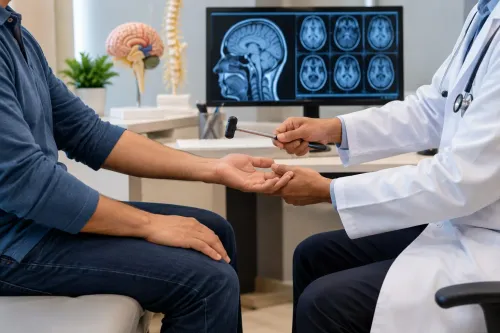
Expect questions before equipment. The clinician will ask when symptoms began, how they have changed, what brings them on, which body parts are affected, and what daily activities they disrupt. Describe associated pain, numbness, weakness, falls, vision or speech changes, sleep, mood, and family history.
If you report a possible seizure, explain what happened before, during, and after it. A witness or phone video can help, along with details of medicines, alcohol, recreational drugs, missed doses, fainting, or illness. For dizziness, give the timing, triggers, duration, falls, hearing symptoms, and medication history.
The neurological examination may include:
- Mental status: attention, orientation, memory, language, and problem-solving
- Cranial nerves: eye movements, pupils, facial strength, hearing, speech, swallowing, and tongue movement
- Strength and reflexes: muscle power, tone, symmetry, and responses at the knees, ankles, and arms
- Sensation: light touch, pinprick, vibration, and joint position
- Coordination: finger-to-nose and heel-to-shin movements
- Gait and balance: walking normally, on heels or toes, in a straight line, and standing with feet together
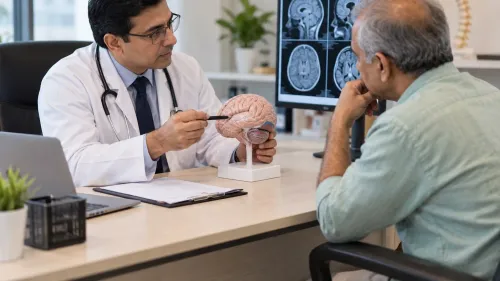
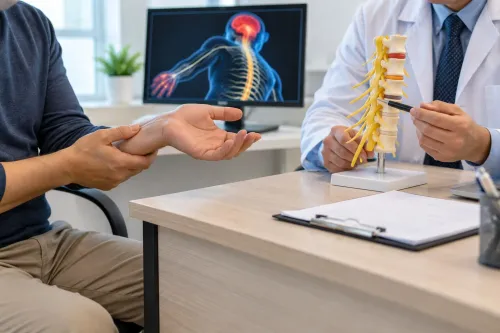
The examination helps connect your symptoms to the brain, spinal cord, nerves, or muscles. A scan is not automatic; the clinician uses the history and findings to decide whether tests are useful. Brief cognitive screening does not by itself diagnose dementia, and a specialised eye-movement assessment applies only to specific acute dizziness patterns.
How Are Tests Chosen, and Why Might There Be No Diagnosis That Day?
Tests are chosen to answer a specific clinical question, not because every neurological symptom needs a scan. The clinician matches your symptom pattern, timing, medical history, and examination findings—such as strength, reflexes, sensation, coordination, gait, balance, memory, and cranial-nerve function—to the test most likely to change diagnosis or treatment.
| Test | What it can add | What a normal result cannot prove |
|---|---|---|
| MRI | Detailed images of brain, spine, or nerves; useful for structural causes | It does not exclude migraine, epilepsy, Parkinson disease, functional neurological disorder, or every neuropathy |
| CT scan | Rapid detection of bleeding, major structural change, or some bone problems | It does not rule out many conditions shown poorly on CT |
| EEG | Records scalp electrical activity when seizures are suspected | A routine normal EEG does not exclude epilepsy |
| EMG and nerve-conduction studies | Examine nerve signals and muscle electrical activity to separate nerve, nerve-root, junction, and muscle disorders | A normal study does not explain every type of pain, weakness, or sensory symptom |
You may leave without a firm diagnosis because some conditions are diagnosed mainly from the history and examination. Parkinson disease, for example, has no single routine blood test or scan that establishes it; follow-up, treatment response, or additional testing may clarify the picture.
Test results also need timing and context: an abnormal finding can be incidental, while a normal result can narrow possibilities without ending the investigation. Ask what each test is intended to answer, when results will arrive, and what happens if they are normal.
Which Type of Care Is Right After the Assessment?
Choose the destination by speed, symptom pattern, and the skill needed next. A sudden facial droop, one-sided weakness or numbness, speech difficulty, sudden vision loss, or abrupt severe imbalance requires emergency assessment, even if it improves. Do not wait for a follow-up appointment with a neurologist.
| Option | What it means | When it applies |
|---|---|---|
| Emergency care | Immediate assessment and brain or heart-risk treatment | Stroke warning signs, prolonged or repeated seizures, inability to breathe or swallow, or rapidly worsening weakness |
| Specialist neurology | Detailed neurological diagnosis and treatment planning | Persistent weakness, numbness, tremor, seizures, memory change, unusual headaches, or unexplained symptoms |
| Primary care | Review of common causes, medicines, blood pressure, glucose, and referrals | Mild or general symptoms without an emergency pattern |
| Rehabilitation | Recovery of movement, speech, balance, or daily function | Problems remaining after stroke, injury, nerve disease, or prolonged illness; a physiotherapist may guide movement recovery |
| Mental-health care | Assessment of mood, anxiety, trauma, or psychiatric causes | Symptoms track with distress, sleep disruption, panic, or mood change; a psychiatrist may be appropriate |
| Ear-and-balance care | Assessment of inner-ear and vestibular disorders | Recurrent positional vertigo, hearing loss, or tinnitus; acute continuous dizziness needs trained clinical assessment |
| Eye care | Examination of the eye or visual pathway | Eye pain, double vision, new visual disturbance, or vision loss without stroke warning signs |
Bring every prescription, non-prescription medicine, and supplement with its dose. Dr Jharna P Mahajan (Bhanushali) can use that list when memory, balance, tremor, or nerve symptoms could reflect medication effects rather than a new disease. If the plan is rehabilitation, ask who coordinates therapy and when progress will be reviewed.
Frequently asked questions
When should you visit a neuro care centre instead of emergency care?
Use emergency care for sudden facial drooping, one-sided weakness or numbness, speech or language difficulty, sudden vision loss, or abrupt severe imbalance, even if the symptom disappears. A neuro care centre suits non-emergency symptoms that need specialist assessment.
What should you bring to a neuro care centre appointment?
Bring your current medication list with doses, medical records, previous scan or test reports, referral letters, allergy details, and a written timeline of symptoms. Note when symptoms began, what worsens them, and how they affect daily activities.
What happens during the first neurological examination?
The clinician reviews your symptoms and medical history, then checks areas such as alertness, speech, eye movements, strength, sensation, reflexes, coordination, balance, and walking. The examination helps identify which parts of the nervous system need further evaluation.
Why might there be no diagnosis after the first visit?
Neurological symptoms can have overlapping causes, and the examination may need support from blood tests, MRI or CT imaging, nerve studies, EEG, or follow-up observation. The clinician may give a working explanation and care plan before confirming a final diagnosis.
What type of care follows a neurological assessment?
Your next step could include treatment, monitoring, rehabilitation, further testing, referral to another specialist, or urgent escalation. The choice depends on your examination findings, test results, symptom severity, and safety risks.