Progressive muscle weakness can arise from several different parts of the nervous and muscular systems. The problem may originate in peripheral nerves, muscles, motor neurons or the junction where nerves communicate with muscles.
Because these conditions require different approaches, Neuromuscular Disorder Treatment should begin by identifying where the problem is occurring.
For patients in Byculla, unexplained weakness that is persistent or worsening deserves assessment, particularly when it begins affecting walking, hand function, swallowing or routine activities.
Symptoms That May Need Evaluation
Neuromuscular conditions can present differently depending on the structures involved.
Possible symptoms include:
- Difficulty climbing stairs
- Repeated falls
- Weak grip
- Muscle wasting
- Drooping eyelids
- Muscle twitching
- Difficulty raising the arms
- Swallowing problems
- Unexplained fatigue with muscle activity
The distribution and progression of weakness provide important diagnostic clues.
How the Cause Is Investigated
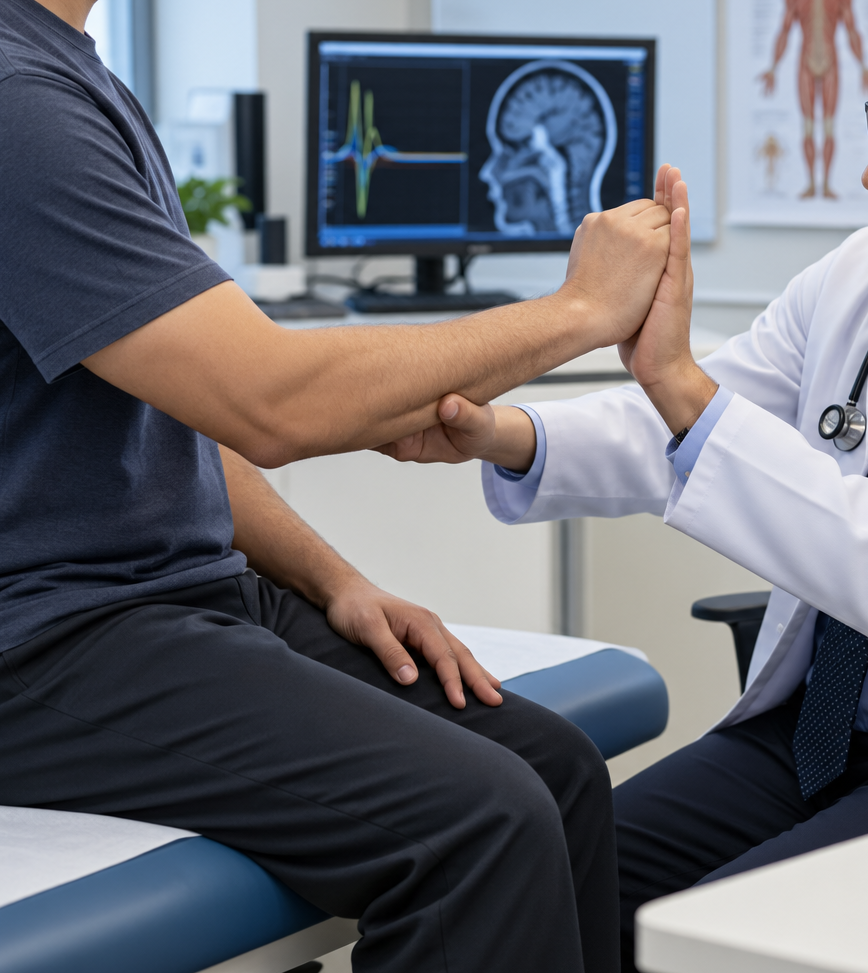
A neurological examination may assess muscle strength, reflexes, sensation, muscle bulk, walking and coordination.
Depending on the suspected disorder, investigations may include blood tests, nerve conduction studies, electromyography, imaging, antibody testing or genetic testing.
Each test answers a different clinical question.
Not every patient requires every investigation.
Treatment Depends on the Diagnosis
There is no single medicine for all neuromuscular disorders.
Some conditions are immune-mediated and may respond to specific medical therapies. Nutritional or metabolic causes may improve when the underlying problem is corrected.
Inherited neuromuscular disorders may require longer-term multidisciplinary management.
Treatment may include medication, physiotherapy, rehabilitation, mobility support, nutritional care and monitoring of breathing or swallowing when relevant.
Understanding Benefits and Risks
The expected benefit depends heavily on the diagnosis.
For some acquired conditions, treatment may substantially improve strength. For progressive conditions, the goal may instead be to preserve function, manage symptoms and reduce complications.
Medicines used for immune-mediated disorders can also have potential adverse effects and may require monitoring.
This makes accurate diagnosis important before starting long-term therapy.
What Is the Recovery Time
There is no standard recovery period for neuromuscular disorders.
A treatable nutritional problem may have a very different outcome from an inherited muscle disease or progressive motor neuron disorder.
Improvement may take weeks or months in some conditions. Other disorders require continuing management rather than having a defined recovery period.
Care After Treatment Begins
Follow-up may monitor:
- Muscle strength
- Walking ability
- Falls
- Swallowing
- Breathing
- Hand function
- Treatment response
- Medication effects
Rehabilitation recommendations can also change as function improves or declines.
Rapidly worsening weakness accompanied by breathing difficulty or significant swallowing problems requires urgent medical evaluation.
Frequently Asked Questions
Does muscle weakness always indicate muscle disease?
No. Peripheral nerves, motor neurons and neuromuscular junction disorders can also cause weakness.
Can these conditions be inherited?
Some neuromuscular disorders are genetic, while many others are acquired.
Is physiotherapy always required?
It can be useful for many patients, but the programme should be adapted to the diagnosis.
Can weakness completely recover?
That depends on the underlying condition and severity.
Dr. Jharna P. Mahajan evaluates neurological and neuromuscular symptoms for patients in Byculla.
The central principle behind Neuromuscular Disorder Treatment is simple but important — establish what is causing the weakness first and build treatment around the specific disorder identified.
Keywords